
A MODERN LABORATORY
Soil Microbiology Insights
Serving farmers, institutions, associations, and citizens.

PRAGMATIC
A practical look at soil vitality, grounded in science and real-world conditions.
CLEAR
Straightforward explanations that everyone can understand.
EDUCATIONAL
Putting results into context so knowledge becomes accessible and actionable.
COLLABORATIVE
An open approach built on exchange and sharing.
ASSESSING SOIL VITALITY
Analysis
Testing soil, compost, and compost teas.
Pachalab also serves as the coordinating laboratory for the Belgian soil regeneration monitoring program be·soil.


SHARING THE SCIENCE OF LIFE
Education
Short courses · Team-building programs · Mobile Living Soil Museum.
For businesses, farmers, agronomists, schools, institutions, associations, and the general public.Pachalab represents Belgium in the CURIOSOIL Community of Practice.
MOVING FORWARD TOGETHER
Research
Your research partner for projects on soil life.
Pachalab was recently selected by BRIOAA and CRA-W for the CARVISOL research project.We also contribute to the development of the Soil Vitality Index (SVI).

WHAT THEY SAY
Testimonials from Farmers and Partners
"A laboratory that runs like a startup. Simple, fast, actionable." ANDRÉ DEWAEL, FARMER
AGILE, EQUIPPED, AND CONNECTED
Our Team
A dynamic team, supported by AI and connected to an international network.

Sébastien d'URSEL

Coordinates operations, social impact, and projects on soil regeneration.
You?

Do you have a background in microbiology or agronomy? Join the team or collaborate within the network.
Our values
FIRST PRINCIPLES
We try to think from physical and logical first principles, not by analogy.
HUMILITY
Life goes beyond our models. We welcome innovation and data —without assuming we can control everything.
DISCERNMENT
When first principles cannot explain everything, we rely on common sense.
Stay Informed
News: launches, growth, updates
© 2025 Pachalab asbl 1027.346.794 - 3 Ch de la Waronche, 1471 Loupoigne - RPM Nivelles - [email protected]
Soil & Compost Analysis
Assess Soil Vitality
Gain a clear picture of the balance and microbial activity in your soil.
Diagnose Issues
Identify whether diseases, pests, poor fertility, or weeds are linked to biological imbalance.
Improve Practices
Use insights into your soil’s biology to choose the right cover crops and amendments to restore balance.
Verify Amendment Quality
Test the vitality and effectiveness of your composts or compost teas before applying them.
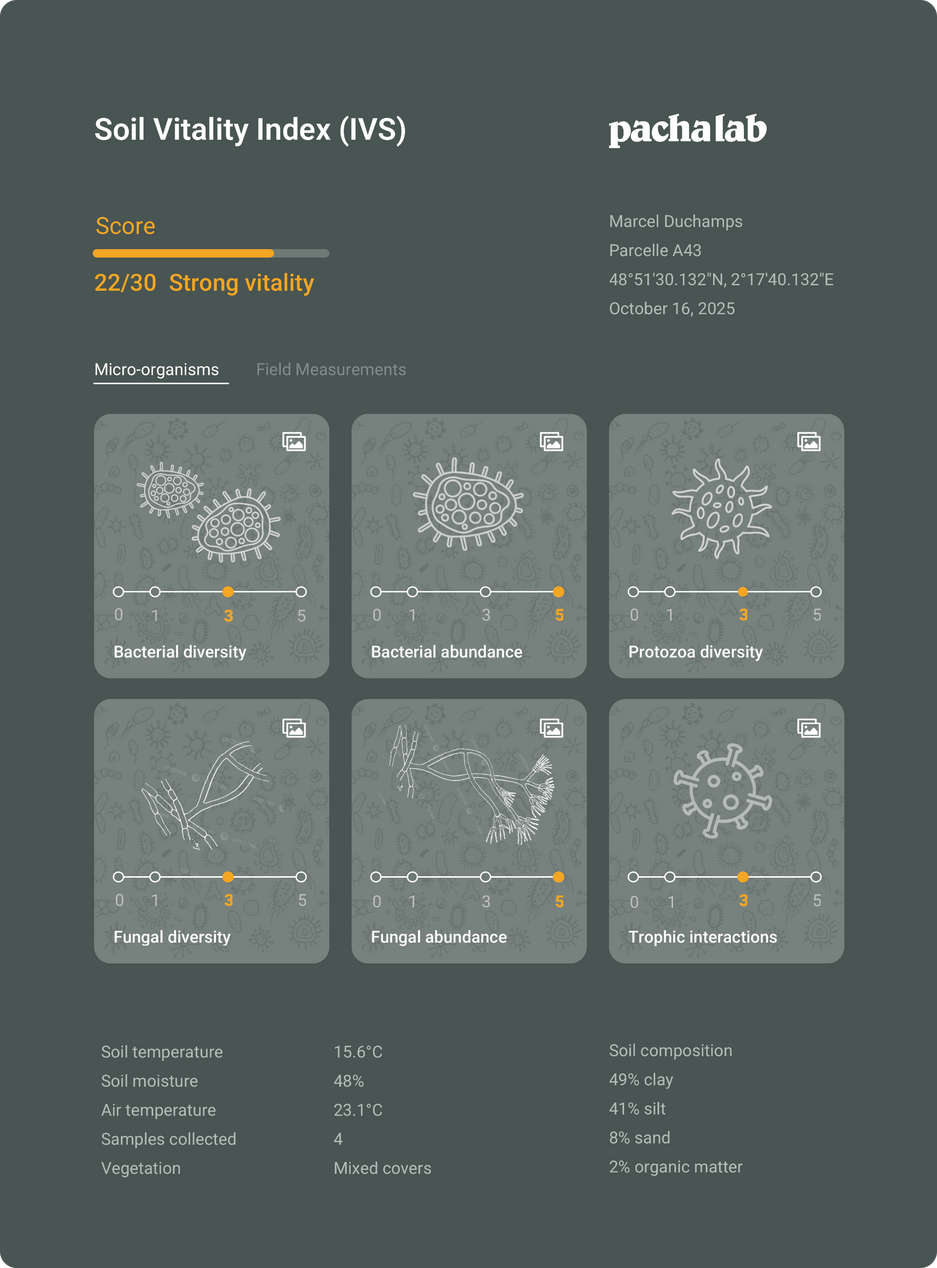
COMPREHENSIBLE RESULTS
Your Report in 5 Days
Get an overall score based on the quantity and diversity of the four main groups of microorganisms essential to soil balance.
CLEAR INSTRUCTIONS
Easy Sampling
A practical guide, available on your phone or printable, helps you collect samples step by step. If needed, we can also come to the field and handle sampling for you.
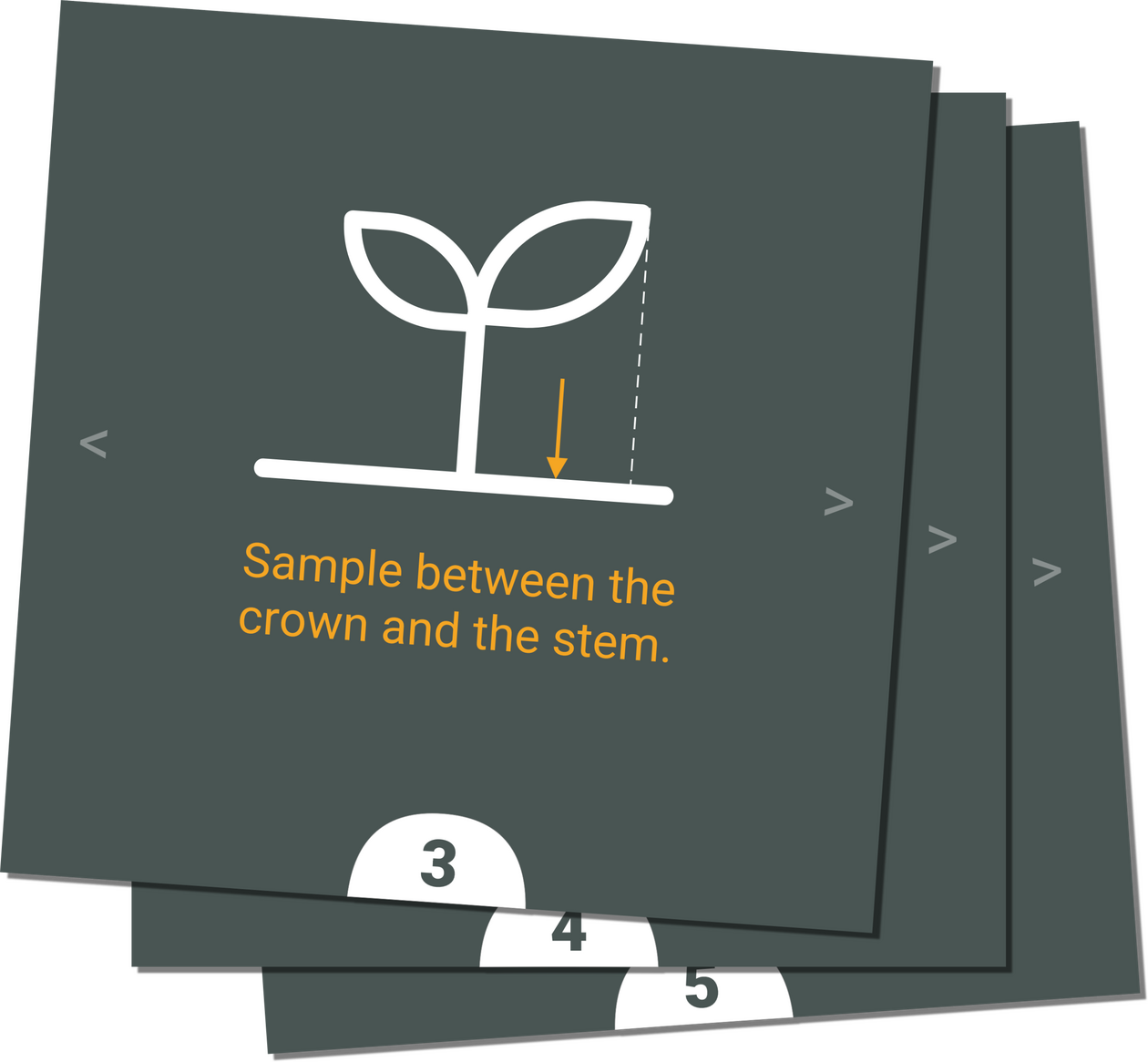

HOW DOES IT WORK?
4 Simple Steps
From choosing your sampling zones to sending them in, each step is designed to make the process straightforward.
Step 1 — Identify your sampling areas
Choose your sampling zones based on your objectives (issues, monitoring, comparisons, etc.). We can advise you if needed.
Step 2 — Determine the number of samples
Typically, one sample per zone is enough (each should include at least 3 soil cores).
Step 3 — Book your time slot
Allow about 1 hour of analysis per sample. We’ll set up a time together to ensure availability.
Step 4 — Collect and send
Take your samples and ship them immediately. They should arrive within 24 hours before your scheduled analysis.
SAMPLE ANALYSIS
100 €
€100 excl. VAT / sample
Analysis within 24h
Photos and videos included
Report delivered within 5 days
ON-SITE SAMPLING
€100 + €20/ha
Additional costs excl. VAT, on top of the sample analysis fee.
Travel costs: €0.65/km
Service available anywhere in Belgium
Date confirmed depending on weather conditions
© 2025 Pachalab asbl 1027.346.794 - 3 Ch de la Waronche, 1471 Loupoigne - RPM Nivelles - [email protected]
Education
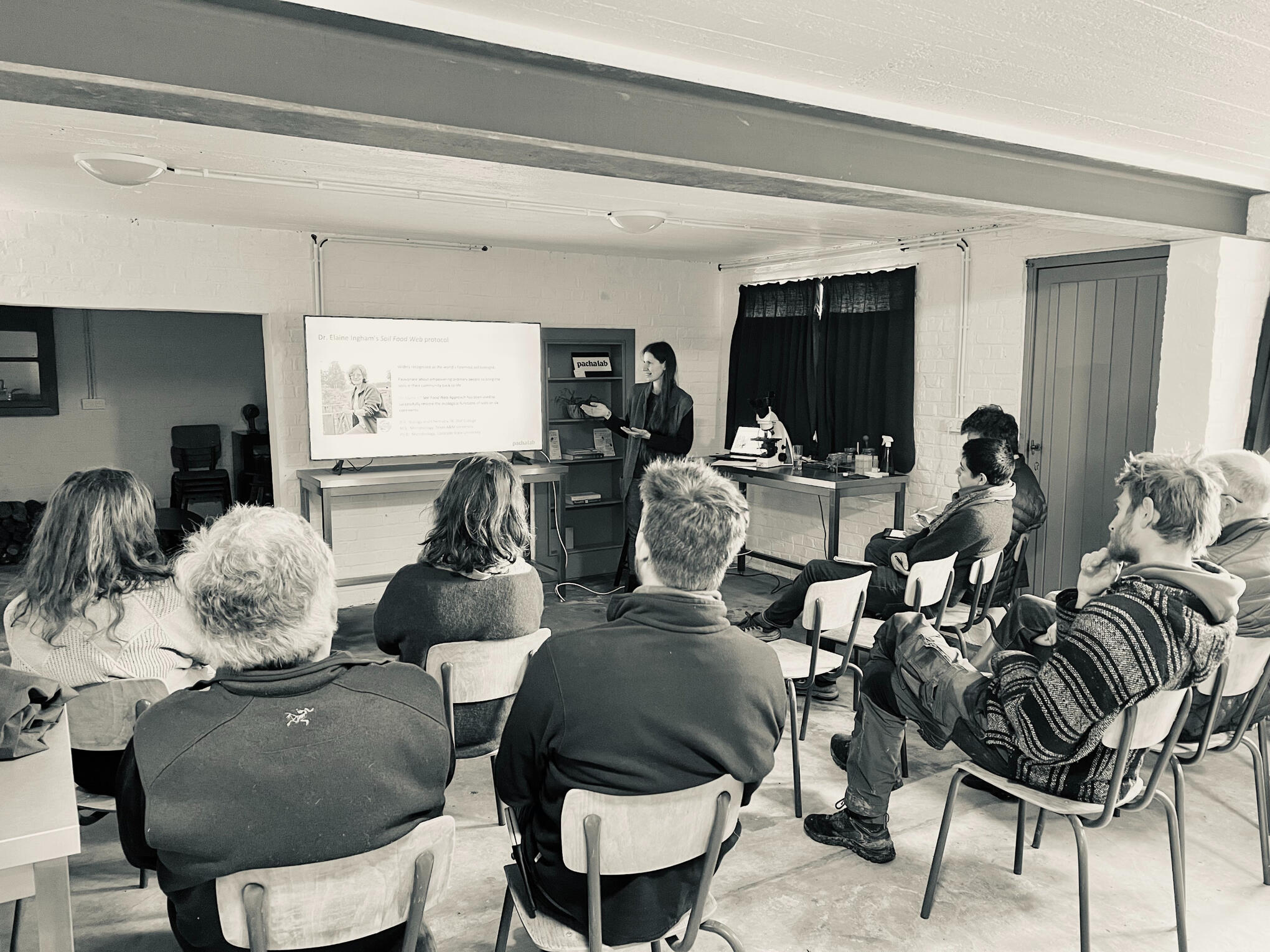
Understanding Living Systems
Training
Short courses and customized modules, offered at our site or yours.
Designed for individuals, farmers, advisors, schools, associations, and organizations.Our goal: help you understand soil life and learn how to take action.
Learn & Play
Workshops & Team-Building
Bring your team together around a powerful question: how can we grow better food while regenerating nature?It all begins in the soil. Through hands-on activities, exchanges, and cooperation, the experience becomes engaging, inspiring, and yes, fun too.
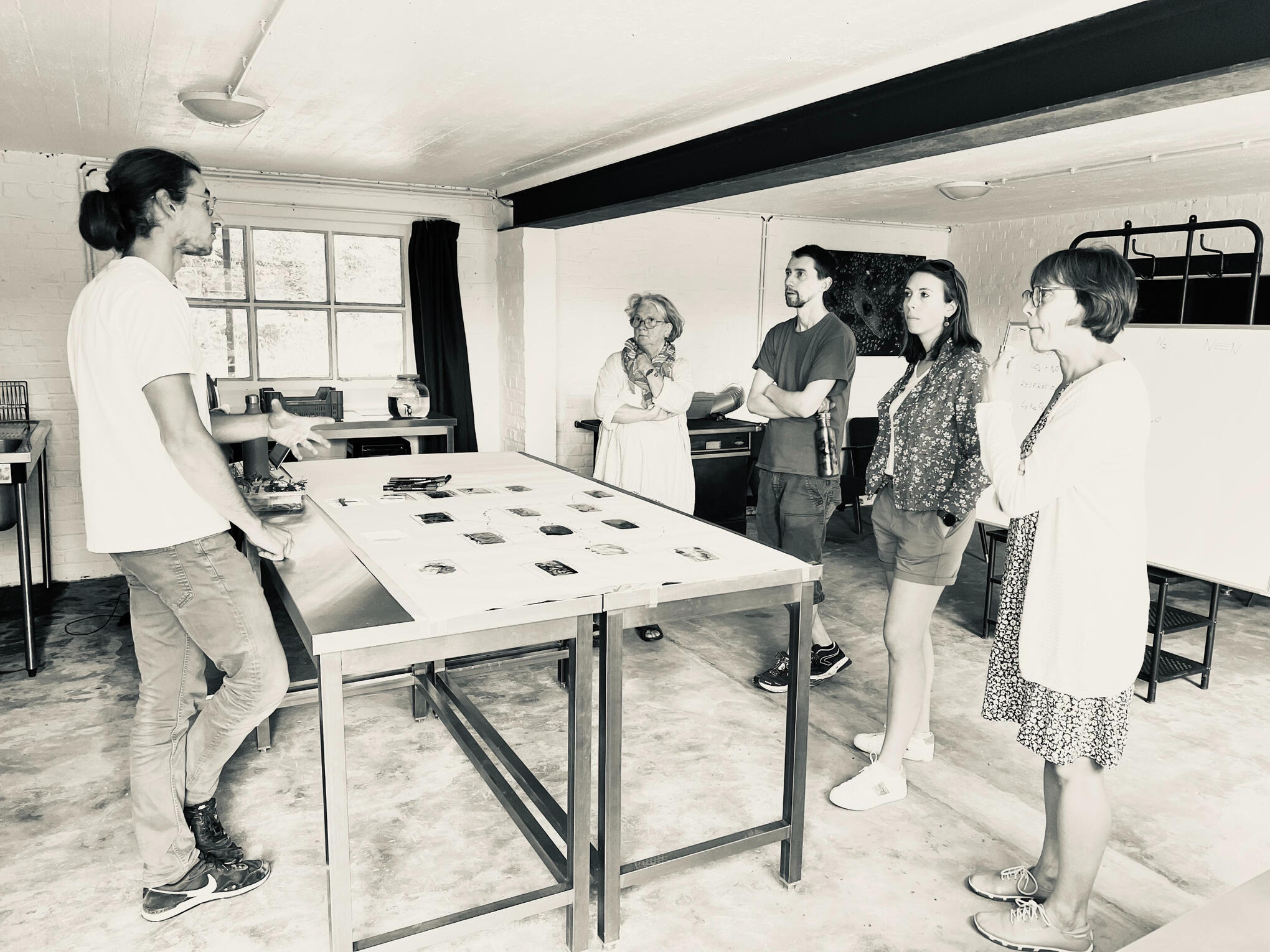
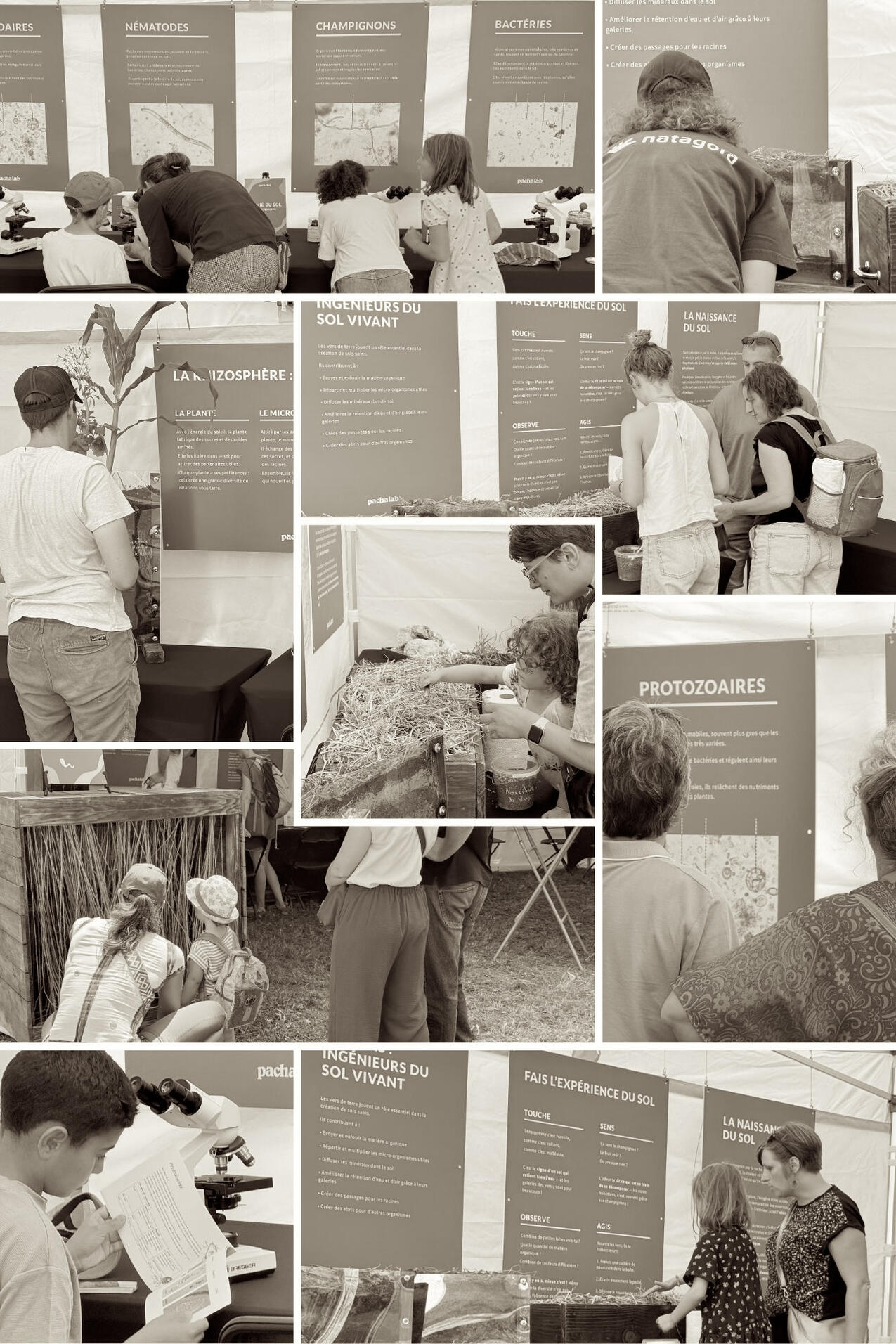
DISCOVER THE HIDDEN LIFE OF SOIL
Mobile Soil Life Museum
An immersive, educational experience that reveals the microscopic life of soil. This hidden world is essential to our land, our food, and our climate. The museum travels to farms, schools, fairs, and events.
© 2025 Pachalab asbl 1027.346.794 - 3 Ch de la Waronche, 1471 Loupoigne - RPM Nivelles - [email protected]
Journey to the Heart of Living Soil
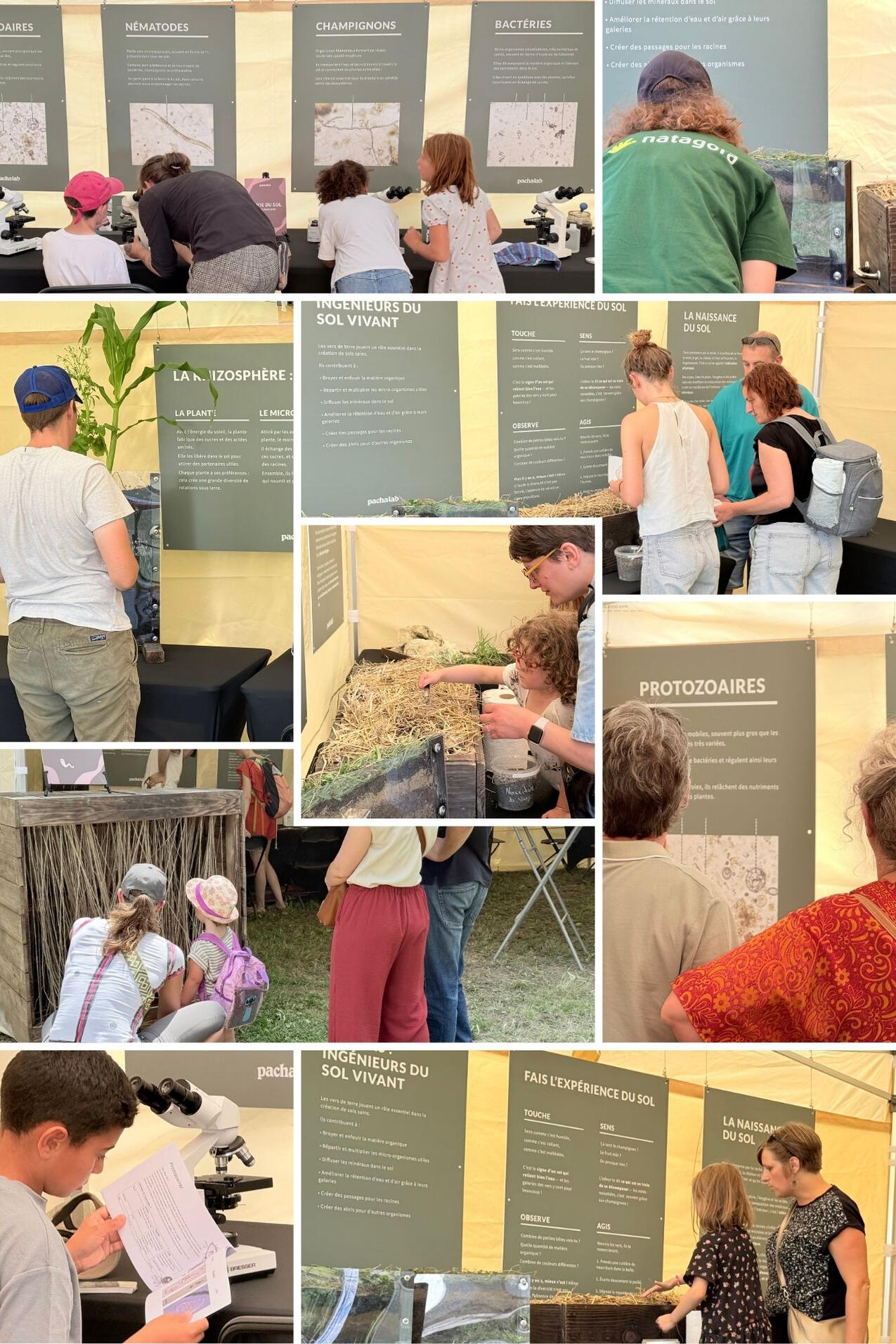
We created the first mobile living soil museum to make the invisible visible: the microscopic life beneath our feet. The fertility of our land, the quality of our food, and the balance of our climate all depend on it.The museum travels to farms, fairs, schools, and events to offer an immersive, educational experience for all audiences. Through a series of illustrated panels, it invites visitors to discover the essential role of soil microorganisms in ecosystem functioning.Each image below corresponds to one of the museum’s panels. You can browse them here as if you were visiting in person and explore at your own pace this vibrant world that remains largely unknown.
© 2025 Pachalab asbl 1027.346.794 - 3 Ch de la Waronche, 1471 Loupoigne - RPM Nivelles - [email protected]
FAQ
Which protocol do you use?
We follow the Soil Food Web protocol, which is based on direct microscopic observation of living microorganisms in a soil extract.Samples are collected following standardized procedures, extracted into a solution, and analyzed within 24 hours. We then identify and quantify the main functional groups: bacteria, fungi, protozoa, and nematodes.This protocol is not designed to measure everything. Instead, it answers a few key questions:- Is life returning to my soil?
- Is my soil biologically balanced?
- Does it have the foundations it needs to strengthen itself?
What is the Soil Food Web?
The Soil Food Web refers to the community of microorganisms and small organisms living in the soil and interacting with each other: bacteria, fungi, protozoa, nematodes, arthropods, earthworms, and more.It is a complex and dynamic ecosystem, where each group plays a role in fertility, soil structure, disease regulation, and plant nutrition.The Soil Food Web protocol, developed by Dr. Elaine Ingham, makes it possible to observe and assess the state of this living network—particularly the microorganisms—to determine whether a soil is healthy, functional, and capable of regenerating.
What are the weaknesses of this protocol?
The protocol does not identify species, only the main functional groups. It relies on human observation under a microscope, which introduces subjectivity: two experienced technicians could interpret the same slide differently.In addition, some statistical extrapolation methods used to convert microscopic observations into global numbers (for example, per gram of soil) are now being questioned by the scientific community, which highlights their limits in terms of precision and robustness.To overcome these limitations, we are developing the Soil Vitality Index (SVI)
: a common and transparent framework that turns observations into indicators that can be compared over time and across fields.The SVI favors a qualitative rather than strictly quantitative approach, focusing on the balance between functional groups, their dynamics, and their role in soil regeneration. This makes it possible to track robust trends, highlight regeneration trajectories, and provide a shared language for farmers, advisors, and researchers.
Isn’t soil life analysis influenced by external factors?
es. Temperature, humidity, light, and other field conditions do affect microorganisms. However, a clearly living soil will not suddenly appear “dead,” and the opposite is also true—it won’t appear “alive” just because of short-term environmental variations. The real risk comes after sampling, during transport, when these factors can have a much stronger impact.Be•soil was created precisely to address this challenge. With an annual subscription, we handle both sampling and analysis directly in your fields. This ensures proper timing, documents local conditions, and guarantees that each sample is analyzed within 24 hours of collection.The result: a consistent protocol, reduced uncertainty, and reliable monitoring of your soils over time.
How often should soil life be measured?
We recommend testing at least once a year, ideally at the same season and under similar conditions (humidity, temperature, etc.). This makes it possible to track trends from year to year.During an active agricultural transition or a comparative trial, testing should be scheduled more frequently, depending on what you want to measure.
© 2025 Pachalab asbl 1027.346.794 - 3 Ch de la Waronche, 1471 Loupoigne - RPM Nivelles - [email protected]
Get in Touch
Have a question? Fill out the form or drop us an email at hello[@]pachalab.be.
We’ll get back to you within 24 hours.We’re based in Genappe (Walloon Brabant), in the heart of Belgium, and visits are by appointment only.
© 2025 Pachalab asbl 1027.346.794 - 3 Ch de la Waronche, 1471 Loupoigne - RPM Nivelles - [email protected]